





Seven principles of Quality Management in ISO 9001

The key changes that ISO 9001 2015 has envisaged are:
- Doing away with quality manual requirements
- It emphasis on organization context and risk base management
- There is no requirement of management representative
- The new standard does not make any reference to the exclusions
The proposed standard is to be printed by the end of year 2015 and the standard is expected to be implemented from the year 2016.ISO 9001 is currently at the Draft International Stage (DIS), the fourth stage of a six stage process.
Organisations are granted a three-year transition period after the revision has been published to migrate their quality management system to the new edition of the standard.
Focus of ISO 9001
The proposed ISO 90015 standard is based on the following seven principles of Quality
management.
-
- Customer centric view:
This is highlighted by explicitly including a clause statement: “Organizations depend on their customers and therefore should understand current and future customer needs, should meet customer requirements and strive to exceed customer expectations.”
It, thus, guides through a process to understand the needs of the customer and convert them into a set of design and manufacturing requirements.
Organizations will have to strive for
-
-
- Prioritize spoken and unspoken customer wants and needs.
- Translate these needs into technical characteristics and specifications
- Build and deliver a quality product or service by focusing everybody toward customer satisfaction
-
Thus, a line of sight from Voice of customer (VOC) to Voice of process is created.
Unfortunately, many organizations collect the VOC and cannot relate it back to the underlying processes. This constitutes a major disconnect and presents a serious situation for the organization to overcome. We must address the basic question as to whether or not these processes are capable of meeting customer and business requirements.
-
- Leadership:
This principle is reflected by including a clause statement: “Leaders establish unity of purpose and direction of the organization. They should create and maintain the internal environment in which people can become fully involved in achieving the organization’s objectives.”
For this purpose leadership needs to
Identify and engage all relevant stakeholders by considering:
-
-
- Listing of all stake holders who impact the value stream carefully
- Ensure to include all the stake holders cutting across functions in end-to-end process management
- Buy-in all stake holder constituents impacted by the process change
- Handoffs between the departments and functions
- Facilitating value stream transformation
- Installing the service level agreements to track and monitor the performance of the constituents
-
And build quality culture by
-
-
- Define the vision and strategies for achieving it
- Communicate the vision and demonstrate a personal commitment
- Creating & maintaining an awareness of quality
- Providing evidence of management leadership on quality.
- Providing opportunities for self-development and empowerment.
- Providing opportunities for participation in the management process.
- Instituting recognition & rewards mechanism
- Engage people:
-
ISO 9001 states that “People at all levels are the essence of an organization and their full involvement enables their abilities to be used for the organization’s benefit.”
Be aware of these common errors in executing engaging people:
-
-
- Not sufficiently emphasizing the urgency and need for change allowing people to be complacent.
- Those guiding process do not have sufficient power.
- Lacking a clear and compelling vision or not communicating it strongly and/or frequently enough.
- Failing to manage the forces that resist change.
- Not ensuring some early successes that encourage others.
- Celebrating victory prematurely.
- Not changing other organizational systems and cultural elements that are required for long-term continuation of change.
-
It is the value placed on achievement. Employees who value a goal will find a way to get it done in spite of its difficulty or adversity. Those in authority can increase employee commitment by explaining why the goal is important and the benefits of achieving the goal. Exerting reasonable pressure for performance. People are more productive when they believe their expectations will be achieved.
-
- Process approach:
“A desired result is achieved more efficiently when activities and related resources are managed as a process.”
It is applicable to both:
-
-
- Products/Services to eliminate defects
- Processes to produce defect-free products/Services
-
What do We Manage Actually? It is the process we need to manage

Every process is structured with Inputs, activity, and Outputs. We evaluate the inputs to ensure the best quality and timing, we ensure the process has value added and we measure the output to ensure metrics and objectives are completed. How can we achieve the best results of people, machines and materials? Standardized process will assist us in achieving these goals.
Processes are dynamic-they cause things to happen. It helps us in identifying the interfaces of key activities within and between the functions of the organization. There is no one best way to do work. Workers should be involved in designing the work. The purpose of standardized processes is that we constantly improve.
To create the process approach organizations need to:
-
-
- Hold workshop of leader responsible for maintaining standard processes
- Continually look for ways to improve the existing standards
- Conduct small group Improvement activities regularly to gather new ideas and alert one another to problems as they arise.
- Audit the processes regularly where standards have been implemented for corrective actions
- Improvement:
-
The term “Continual Improvement” has been changed to “Improvement” under ISO 9001 2015 which is stated as “improvement of the organization’s overall performance should be a permanent objective of the organization.”
The power of compound improvement adds up to bigger improvements. If we constantly improve a lot of things by 1%, then we will eventually get to the large or quantum leap improvements.
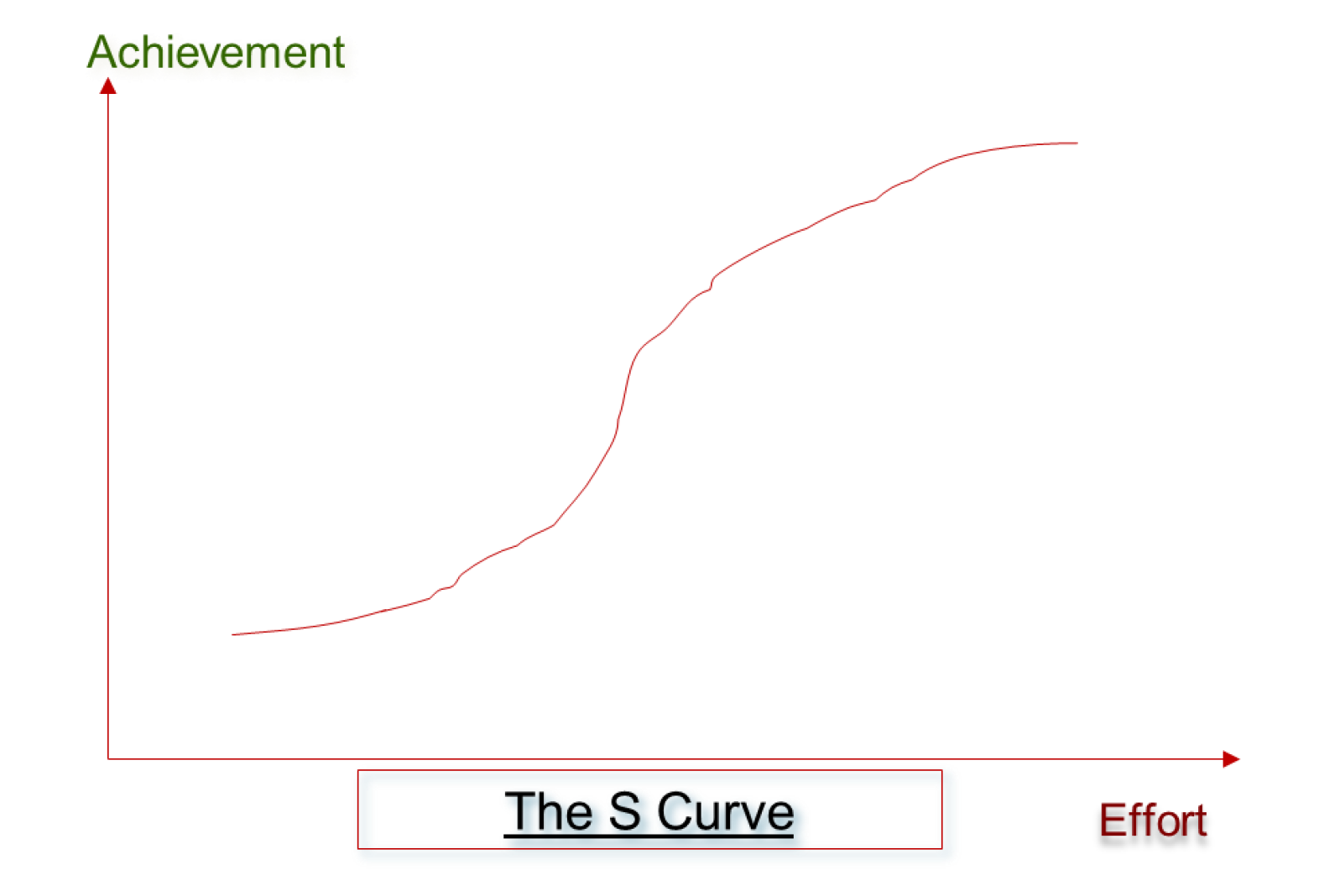
This can be achieved by way of process of becoming better, faster, more productive & contributing towards common goal. “Once you think you have arrived, you have already started your descent.” One must never think they “have arrived.”
-
- Evidence-based Decision Making:
The term “Factual approach to decision making” has been change to “Evidence-based Decision Making“.
Evidence is information that shows or proves that something exists or is true. Evidence can be collected by performing observations, measurements, tests, or by using any other suitable method. Any decision making should away be based on evidences. The organization should ensuring that data/information is sufficiently accurate and reliable. The organization should make data accessible to those who need them. The organization should analyse data using appropriate tools. The organization should make decision and take actions based on analysis of data, balanced with experience and intuition.
-
- Relationship Management:
Interested parties influence the performance of an organization. Sustained success is more likely to be achieved when an organization manages relationships with its interested parties to optimize their impact on its performance. Relationship management with its supplier and partner network is often of particular importance.
Examples of interested parties include customers, suppliers, owners, partners, employees, unions, bankers, or members of the general public. Interested parties are also referred to as stakeholders. Relation management with interested parties meaning sharing knowledge, vision, values, understanding and suppliers are not treated as adversaries. The organization establishes a relationships that balance short-term gains with long term considerations. There is pooling of expertise and resources with partners.
In a nutshell, Suppliers must be able to see into their customers operations and Customers must be able to see into their suppliers operations by involving them in your activities.
About the author: Jay P. Patel is an ASQ Fellow, Master BB, Lean Expert, PMP, Risk Management Professional with 10 ASQ Certifications, and many other certifications. He has over 30 years’ experience in improving processes, people and achieving breakthrough performance at many companies.
For more information or questions, contact jayp@qpsinc.com. (Website: www.qpsinc.com)